
日時:2026年2月24日(火)13:30-14:30
場所:機械科学会議室(基礎工学研究科A棟3階)
講演者:
Gianluca Grenci
1 Mechanobiology Institute, National University of Singapore
2 Biomedical Engineering Department, National University of Singapore
講演題目:
JeWells: Scalable High-Throughput Light-Sheet Microscopy for Organoid Growth, Differentiation, and Live Imaging
キーワード:
soSPIM, light-sheet microscopy, organoids, high content screening
要旨:
Building on our established single-objective selective plane illumination microscopy (soSPIM) platform [1], we have developed an integrated strategy that enables parallel culturing of hundreds of organoids with unimpeded access for live light-sheet microscopy and high-content screening (HCS). At the core of this approach is a novel microfabricated platform featuring arrays of pyramidal micro-cavities—termed JeWells—fabricated on standard coverslips or multiwell plates. Each JeWell consists of hundreds to thousands of inverted pyramidal microwells flanked by 45° optically smooth, gold-coated mirroring surfaces, allowing precise light-sheet generation and high-NA detection from a single objective. JeWells are produced via a replica-molding process analogous to that used for soSPIM devices [reference if needed]. Primary molds are created by exploiting silicon wet etching to expose (110) crystallographic planes as mirroring facets [3], or alternatively via glass laser-etching. A PDMS replica is cast, followed by molding in a UV-curable, biocompatible optical adhesive (e.g., NOA73). After gold sputtering for reflectivity, the thin polymeric film is transferred to the substrate, yielding a ready-to-use device. We established protocols for cell seeding, aggregation, and differentiation across multiple lineages, demonstrating broad compatibility with diverse organoid models. The high well density exceeds HCS requirements, enabling >100 organoids per area equivalent to one 384-well plate position. All steps—from differentiation to immunostaining—occur within the device, eliminating organoid transfer and associated perturbations. In this seminar, I will present results from human iPSC-derived hepatocyte organoids, including rapid 3D imaging of hundreds of organoids per chip. Each organoid was stained for Sox17, phalloidin, and DAPI, with full Z-stacks (up to 50 planes) acquired in <20 minutes via mirror-guided laser scanning. We further leverage the protective micro-niche environment of JeWells to enable live imaging studies of organoid development under microgravity conditions, isolated from confounding factors such as shear stress. This platform opens new avenues for scalable, high-throughput 3D organoid phenotyping and space biology applications.
[1] Galland, R., Grenci, G., Aravind, A., Viasnoff, V., Studer, V., Sibarita, J.-B., 3D high-and super-resolution imaging using single-objective SPIM (2015) Nature Methods, 12 (7), pp. 641-644.
[2] Ong, H.T., Karatas, E., Poquillon, T. et al. Digitalized organoids: integrated pipeline for high-speed 3D analysis of organoid structures using multilevel segmentation and cellular topology. Nat Methods 22, 1343–1354 (2025).
[3] Barycka, I., Zubel, I., Silicon anisotropic etching in KOH-isopropanol etchant, Sensor Actuat A-Phys 48 (1995), 229-238
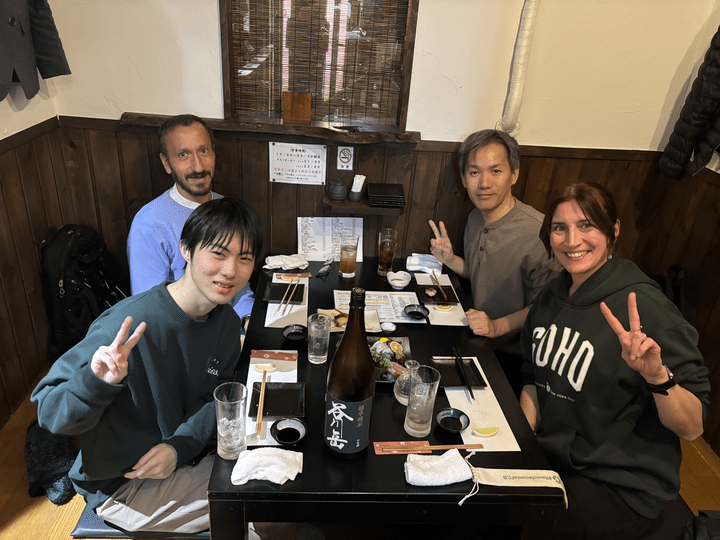 研究室に一週間滞在していただきました